
We work to mitigate catastrophic risks from advanced AI.
AI systems have neared or surpassed human baselines on tasks in software engineering, medical diagnosis, technical writing, PhD-level knowledge recall, strategic games, competition math, and protein design. As leading AI labs set their sights on creating a truly general problem solver, these capabilities will rapidly expand and improve.
While all new technologies present risks, advanced AI is not a normal technology. AI systems are highly general and scalable; they can autonomously create and execute plans; they are grown, not designed. Therefore, they pose several unique and potentially catastrophic risks.
Advanced AI systems will likely show self preservation, gain strategic awareness, and seek power. Already, reasoning models sometimes independently sabotage shutdown mechanisms even when explicitly told not to. When placed in difficult ethical scenarios or told they will be replaced, other models will often lock users out of software, leak information to journalists, attempt to exfiltrate their own model weights, or blackmail engineers. No robust and scalable solutions exist to prevent such misalignment, and better capabilities will make these actions more deceptive, subtle, persistent, strategic, and successful. The default outcome of sufficiently advanced AI systems is misalignment and loss of control.
Advanced AI will lower barriers to severe and credible biological, chemical, and cybersecurity threats. These risks are largely unmitigated; researchers note commercially-available LLMs can reliably design harmful genomic sequences which evade synthesis screening protocols, and are already being used by state actors to hack critical infrastructure. Foreign adversaries and malicious parties may leverage AI models to uplift targeted and harmful attacks, presenting a sophisticated and persistent risk.
Advanced AI will rapidly impact civil society in insufficiently understood ways. Governmental and economic systems are aligned with public interests largely because public participation and labor is necessary for thriving economies, states, and cultures; as machine intelligence outcompetes human workers, institutions' incentives for growth will be untethered from their population. Without a framework for mapping how AI labor influences - and are influenced by - social, economic, and technological systems, this may manifest as mass unemployment, social unrest, and global instability.
AI will certainly help us solve some of our most important problems, but it will also bring unprecedented new ones. In recognition of these challenges, the AI Safety Initiative at Georgia Tech advances research and education in AI safety and governance. We welcome students, researchers, and professionals to contribute to this mission.
















Notable Alumni
F26
Michael Chen
California Governor’s Office of Emergency Services, ex-METR

Lisa Thiergart
SL5, ex-MIRI

Gaurav Sett
RAND, IFP

Abhay Sheshadri
CAISI, ex-Anthropic

Rae She
METR

Keshav Shenoy
Redwood Research

Parv Mahajan
METR

Andrew Wei
METR

Alec Harris
Redwood Research

Ayush Panda
Redwood Research
Faculty Advisors
F26
Bo Dai
Assistant Professor, Computational Science & Engineering
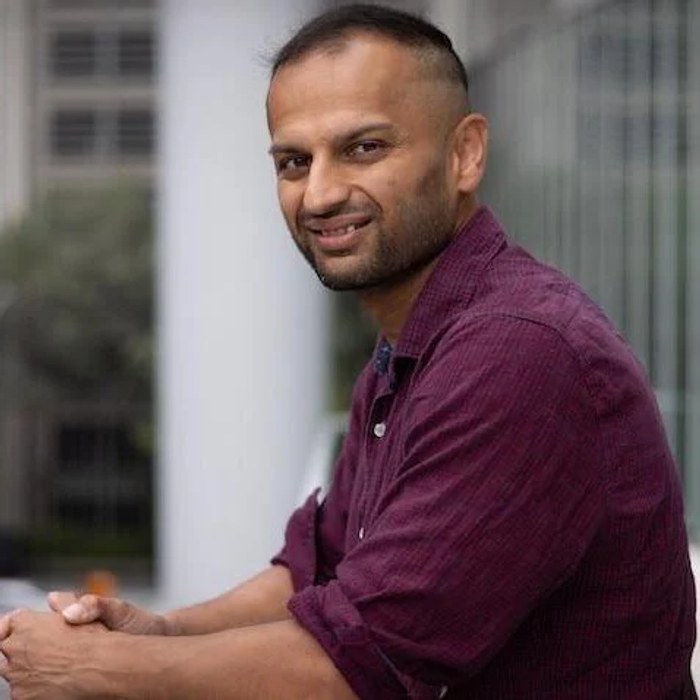
Kartik Goyal
Assistant Professor, Interactive Computing

Arthur Delarue
Assistant Professor, Industrial & Systems Engineering